
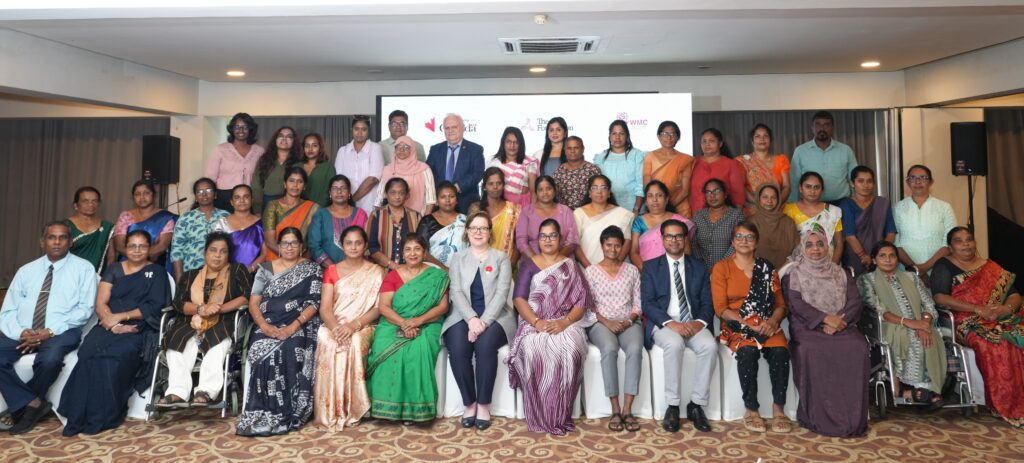
Colombo, Sri Lanka: The third National Convening on Recognizing Unpaid Care Work, organized by The Asia Foundation and Women and Media Collective with the support of Global Affairs Canada, called for a dedicated policy to address the disproportionate burden of unpaid care work done by women and girls in Sri Lanka, and featured the work of women’s organizations from across the country to recognize, reduce, and redistribute unpaid care work responsibilities at the community level.
Held annually since 2024 in celebration of the International Day of Care and Support, this year’s convening was held under the theme: “From Policy to Community-driven Solutions: Engaging Communities to Share Unpaid Care Responsibilities”. The convening brought together government representatives, the donor community, development practitioners, private sector stakeholders, civil society organizations, and women’s organizations to advance recognition of unpaid care work in Sri Lanka.
When we started this journey, we shared one important priority. The Asia Foundation, along with the Ministry of Women and Child Affairs, Global Affairs Canada, the Women and Media Collective, and, most importantly, our partner women’s organizations, wanted to put the experiences, needs, and rights of women and girls at the center of how we understand and address unpaid care work.
Johann Rebert, Country Representative in Sri Lanka and the Maldives, The Asia Foundation
Canada remains firmly committed to supporting women’s empowerment, gender equality, and inclusive governance in Sri Lanka. We see this initiative as an important complement to our broader efforts to advance women’s rights, strengthen women’s organizations, and promote inclusive economic participation.
Her Excellency Isabelle Martin, High Commissioner, High Commission of Canada to Sri Lanka and the Maldives
Unpaid care work, including caring for family members and household work, is an essential part of communities and economies. Globally and in Sri Lanka, unpaid care work is disproportionately shouldered by women and girls, and socially perceived as ‘women’s work’, which restricts their choices and opportunities.
The Sri Lankan government has recognized the need to address unpaid care work in the National Policy Framework, A Thriving Nation, A Beautiful Life, and the National Policy on Gender Equality and Women Empowerment. Speaking at the event, Hon. Saroja Savithri Paulraj, Minister of Women and Child Affairs, expressed the Ministry’s commitment to lead efforts to address unpaid care work through a dedicated national policy.
The Ministry of Women and Child Affairs remains committed to ensuring that unpaid care work is recognized as a women’s rights issue and that this recognition leads to practical action. Our focus must now be on translating policy commitments into meaningful improvements in women’s lives, so that women have greater opportunities to participate in education, employment, and the public life, while also having time for rest and their own aspirations.
Hon. Saroja Savithri Paulraj, Minister of Women and Child Affairs, Ministry of Women and Child Affairs
The convening featured discussions on the draft National Policy on Unpaid Care Work, which seeks to strengthen Sri Lanka’s commitments to women’s rights, social protection, human development, and equitable economic growth. The policy is currently under review and is expected to be submitted for Cabinet approval this year.
The research and advocacy that WMC has been carrying out for more than a decade have been exciting and challenging. With The Asia Foundation’s support, awareness-raising on social norms change and shared responsibility for unpaid care work at the community level by women’s organisations is a significant marker in this journey. Women and Media Collective is very pleased to be working with the Ministry of Women and Child Affairs to draft a National Policy on Unpaid Care Work.
Dr. Sepali Kottegoda, Director Programs – Gender and Political Economy, Women and Media Collective
Panel discussions highlighted the work of women’s organizations who are piloting women-led, community-based day care models for elders, children, and persons with disabilities in Jaffna, Batticaloa, and Anuradhapura, and community-led solutions in Kurunegala, Nuwara Eliya, Hambantota, and Batticaloa that raise awareness and advocate for sharing unpaid care responsibilities. Panelists highlighted the challenges women face in accessing affordable and accessible day care services and the need to engage men and boys to recognize and share care work.
About The Asia Foundation
The Asia Foundation works to solve the toughest social and economic challenges in Asia and the Pacific. We combine deep expertise, trusted partnerships, and evidence-based insights to advance effective development and policy solutions that endure. For more than 70 years, we have partnered with governments, communities, and a wide array of changemakers to navigate complexity and help them realize their aspirations.
About Women and Media Collective
The Women and Media Collective was formed in 1984 by a group of Sri Lankan feminists interested in exploring and addressing issues of concern to women in Sri Lanka. Since then, the organization has actively engaged in bringing about change for a just society that does not discriminate based on gender. Previous work has contributed to social and political change, helped include women and gender concerns in peace processes, increased state recognition of women’s rights, and supported legislative and policy reforms to promote and protect women’s rights.